California Supreme Court Limits Police Search Powers in Marijuana Cases
In a landmark decision, the California Supreme Court has ruled that the presence of loose marijuana in a vehicle does not constitute grounds for a police search. The ruling, which was handed down on January 30, 2026, stems from a Sacramento traffic stop in which officers found a small amount of loose-leaf marijuana on the backseat floorboards of a vehicle.
According to the court’s opinion, written by Justice Goodwin Liu, the key factor in determining whether a search is justified is whether the marijuana is readily consumable. In this case, the court found that the loose marijuana scattered on the rear floor of the car did not pose an imminent threat of consumption, and therefore did not violate the state’s open container laws.
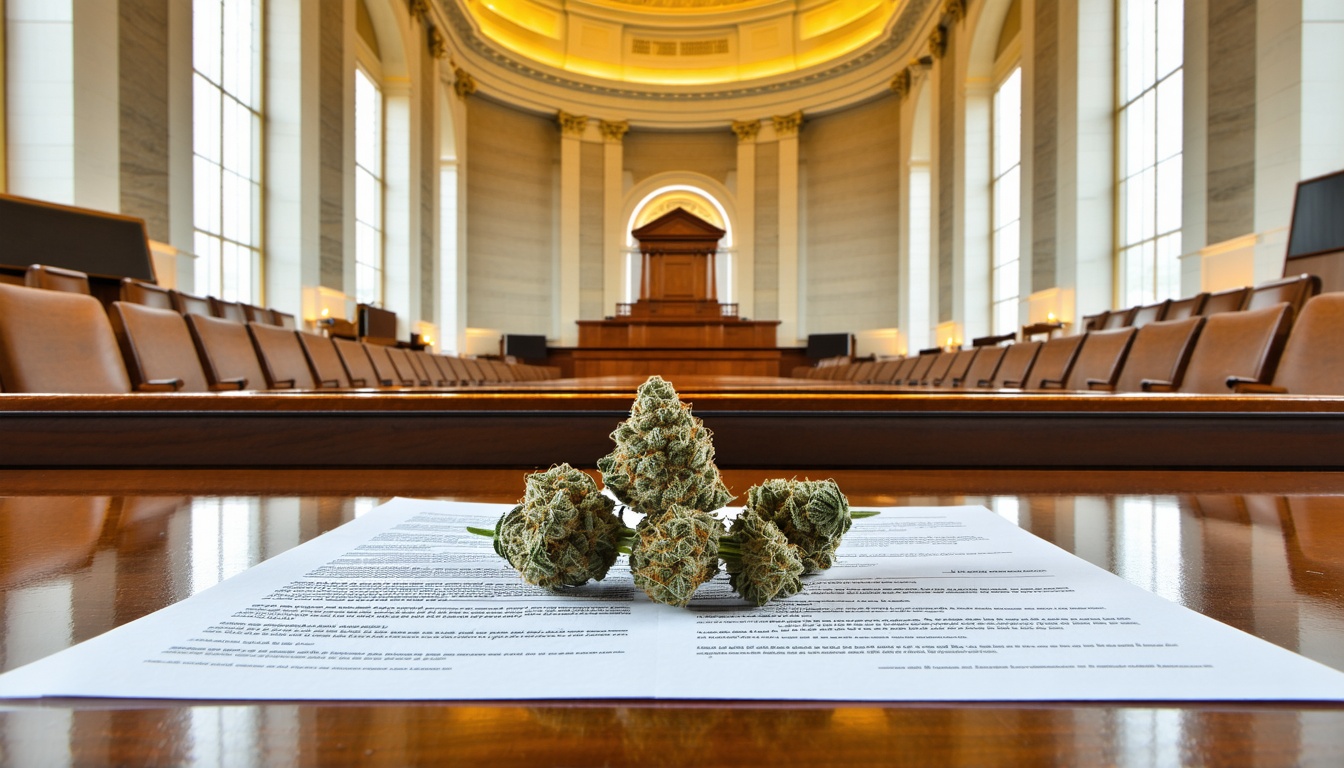
The incident that led to the ruling began with a traffic stop in Sacramento, during which officers discovered 0.36 grams of loose-leaf marijuana on the backseat floorboards, as well as a tray commonly used for rolling marijuana joints. The officers initially considered this evidence sufficient to justify a search of the vehicle, citing a potential violation of the state’s open container laws.
However, the California Supreme Court disagreed, stating that the presence of loose marijuana in a vehicle is analogous to spilled beer, and does not necessarily imply that the substance is readily consumable. The court’s opinion emphasized that the officers had not suggested that the driver or passenger could have easily accessed the scattered marijuana, and that there was no evidence of paraphernalia that could have facilitated its consumption.
The ruling has significant implications for police search powers in California, limiting their ability to conduct searches based solely on the presence of loose marijuana in a vehicle. As Justice Liu wrote, “The question before us is whether a small amount of loose marijuana scattered on the rear floor of a car violates that provision. We hold it does not. We further hold that the officers here lacked probable cause to conduct a search of the vehicle.” The decision is expected to have far-reaching consequences for law enforcement agencies across the state, and may lead to changes in the way they approach searches related to marijuana possession.