
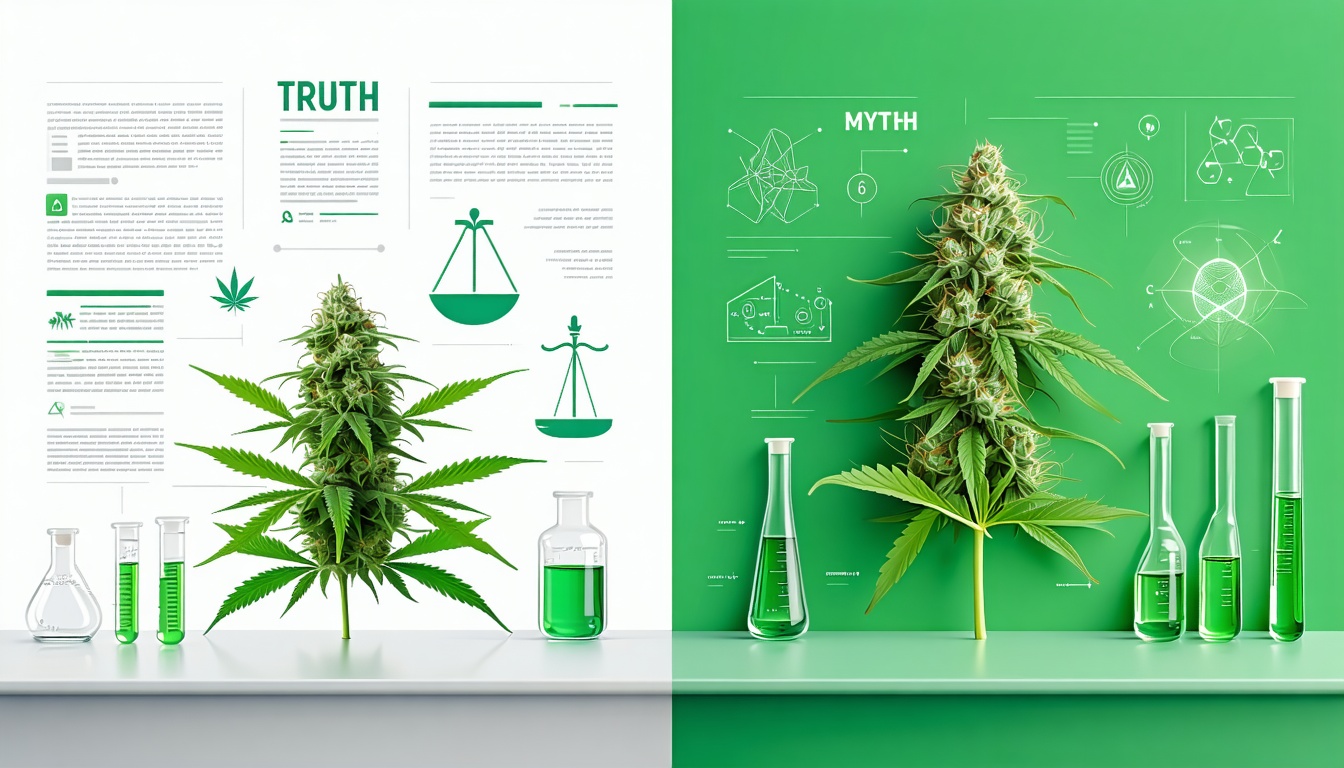
Debunking the Myths: Separating Fact from Fiction on Cannabis
The United States government has not legalized marijuana, despite growing support for its use and the increasing number of states that have legalized it for medical or recreational purposes. However, many misconceptions surround this controversial substance. Here are four common myths about cannabis, debunked:
Myth #1: The US government has legalized marijuana
Reality: While some states have legalized marijuana, the federal government still considers it a Schedule I drug, making it illegal to manufacture, distribute, and possess. This classification is based on the drug’s alleged potential for abuse and lack of accepted medical use.
Myth #2: Cannabis is a dangerous drug
Reality: Studies have shown that cannabis is less harmful than many other substances, including tobacco and alcohol. In fact, the American Medical Association and the National Academy of Medicine have recognized cannabis as a safe and effective treatment for certain medical conditions.
Myth #3: Cannabis use leads to addiction
Reality: While cannabis can be addictive, the likelihood of developing a dependence on it is relatively low. According to the National Institute on Drug Abuse, about 30% of people who use cannabis will develop a dependence on it, compared to 15% of people who use tobacco and 20% of people who use alcohol.
Myth #4: Cannabis has no medical benefits
Reality: Research has shown that cannabis can be an effective treatment for a range of medical conditions, including chronic pain, nausea, and muscle spasms. In fact, many states have legalized medical marijuana specifically to provide patients with access to this treatment.
By separating fact from fiction, we can have a more informed discussion about cannabis and its potential benefits and risks. As the debate around marijuana legalization continues, it’s essential to rely on accurate information and evidence-based research to guide our decisions.