
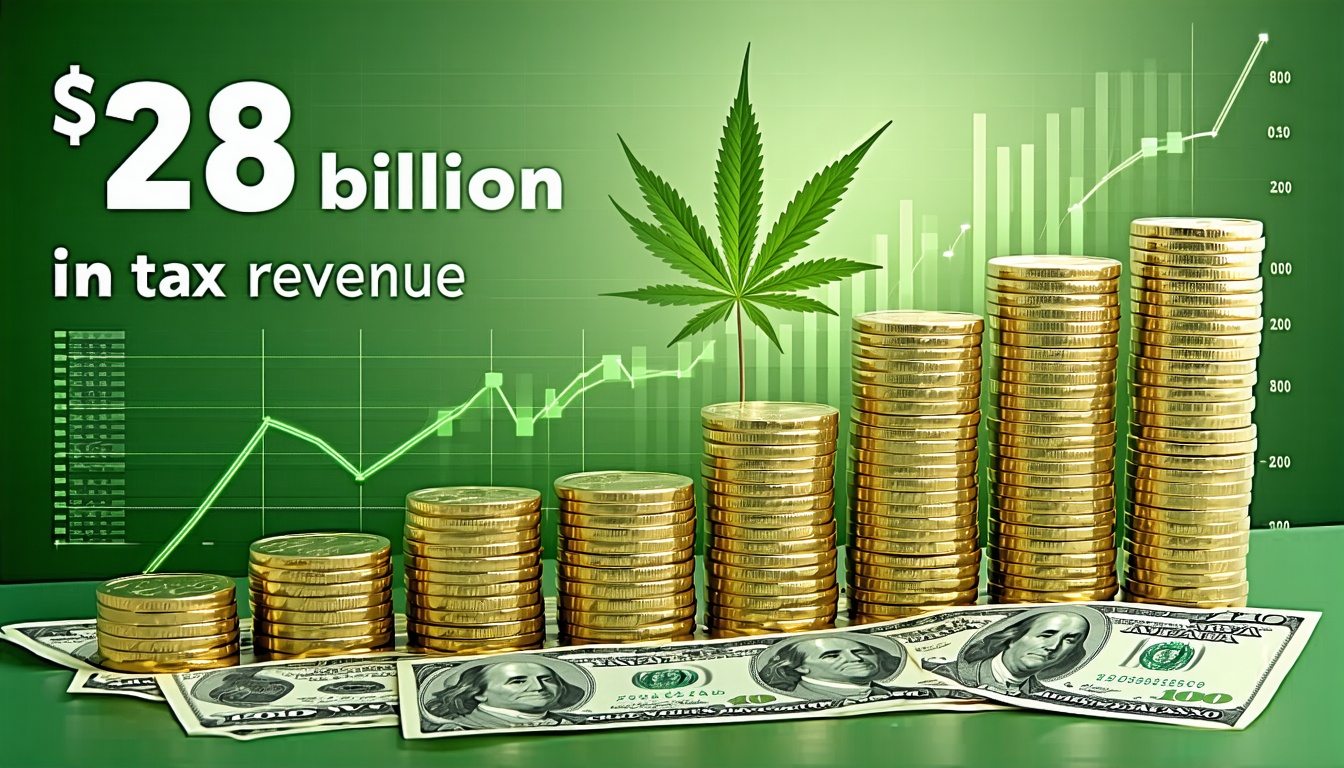
Cannabis Tax Revenue Surpasses $28 Billion Since Legalization
In the 12 years since Colorado and Washington became the first states to legalize recreational cannabis, the industry has generated a staggering $28.4 billion in tax revenue. Today, 24 states and Washington D.C. have legalized recreational cannabis, with 2025 marking the largest annual haul at $4.57 billion.
The revenue has been used to support a wide range of programs, including education, infrastructure, housing, and community reinvestment. Some states have put the funds towards their general budgets, while others have targeted specific needs, such as Medicaid and substance abuse treatment.
The Marijuana Policy Project (MPP), a cannabis policy reform group, released a report highlighting the industry’s growth and impact. According to the report, early legalization states like Colorado and Washington generated significant revenue almost immediately, with annual revenue surging from $1.3 billion to nearly $4 billion between 2018 and 2021.
However, the report also notes that revenue growth can plateau. Colorado, for example, saw its cannabis tax revenue surge until 2021, but then decline to $221 million in 2025. This is due in part to the state losing its early lead in cannabis tourism and cross-border sales, as well as dropping cannabis prices due to increased production and competition.
Despite these challenges, the report concludes that cannabis taxation has become a significant contributor to state budgets. In 2025 alone, seven states pulled in over $200 million, and three brought in more than $500 million. California stands out with over $1 billion collected in 2025, and more than $7 billion since recreational sales began in 2018.
The report’s findings underscore the importance of responsible taxation and regulation in the cannabis industry. While revenue alone is not a guarantee of policy success, it is clear that recreational cannabis legalization has become a significant source of public revenue across the United States.