
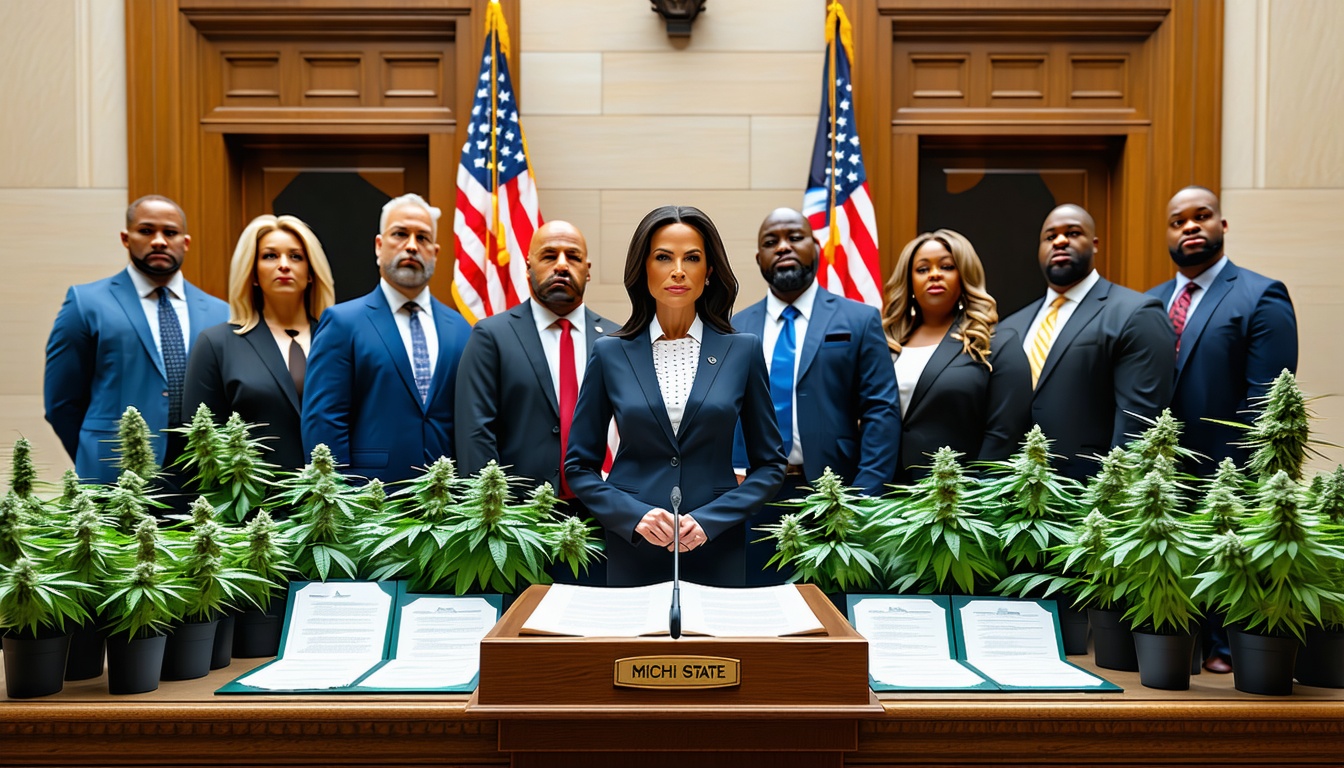
Michigan State Senators Unite to Repeal Controversial Marijuana Tax
A bipartisan group of state senators is pushing to repeal Michigan’s 24% wholesale marijuana tax, citing its negative impact on the state’s cannabis industry. The tax, which went into effect on January 1, is already showing signs of hurting the industry, with recreational cannabis sales declining by 8.2% in the first month under the new tax.
State Senator Jonathan Lindsey, a Republican from Coldwater, introduced Senate Bill 810 to eliminate the wholesale tax, which is part of a road-funding package approved by Governor Gretchen Whitmer and lawmakers last year. Lindsey argues that the tax will lead to widespread job losses and damage Michigan businesses.
“The government’s constant attempt to get more out of people is unsustainable and will never lead to a healthy economy,” Lindsey said in a statement.
The bill has bipartisan support, with Democratic Senators Jeff Irwin, Jeremy Moss, Sylvia Santana, and Republicans John Bumstead, Roger Hauck, Joe Bellino, and Jim Runestad also sponsoring the legislation.
The wholesale tax is imposed on cannabis when it is first transferred from a licensed grower to a dispensary, and while wholesalers are responsible for paying the tax, the cost can be passed on to retailers and ultimately consumers. The Michigan Cannabis Industry Association has sued the state, arguing that the tax is unconstitutional because it effectively amends a voter-approved law without the required supermajority.
The cannabis industry was already struggling due to plummeting prices and oversupply before the wholesale tax took effect. The industry has seen over 900 licenses go belly up and thousands of jobs disappear.
Michigan voters legalized recreational marijuana in 2018, setting the tax rate at 10% to keep the legal market competitive with the illicit one. However, the state’s Cannabis Regulatory Agency estimates that the 24% wholesale tax will generate around $420 million annually for road repairs and other priorities.
Senator Lindsey is skeptical of the estimate, citing the already shrinking market. “I don’t believe this mechanism will generate the expected revenue in the long term, especially if sales continue to decline due to the increased taxes or if legal challenges prevail,” he said.
The bill has been referred to the Senate Committee on Government Operations, where it will be considered further.