Trump’s Marijuana Rescheduling Move Highlights Outdated Gun Ban for Consumers, ACLU Lawyers Tell Supreme Court
In a recent brief submitted to the Supreme Court, ACLU attorneys representing a man at the center of a U.S. Supreme Court case have argued that the federal ban on gun ownership by marijuana consumers is unconstitutional and outdated. The brief comes after President Donald Trump recently directed the completion of the federal cannabis rescheduling process.
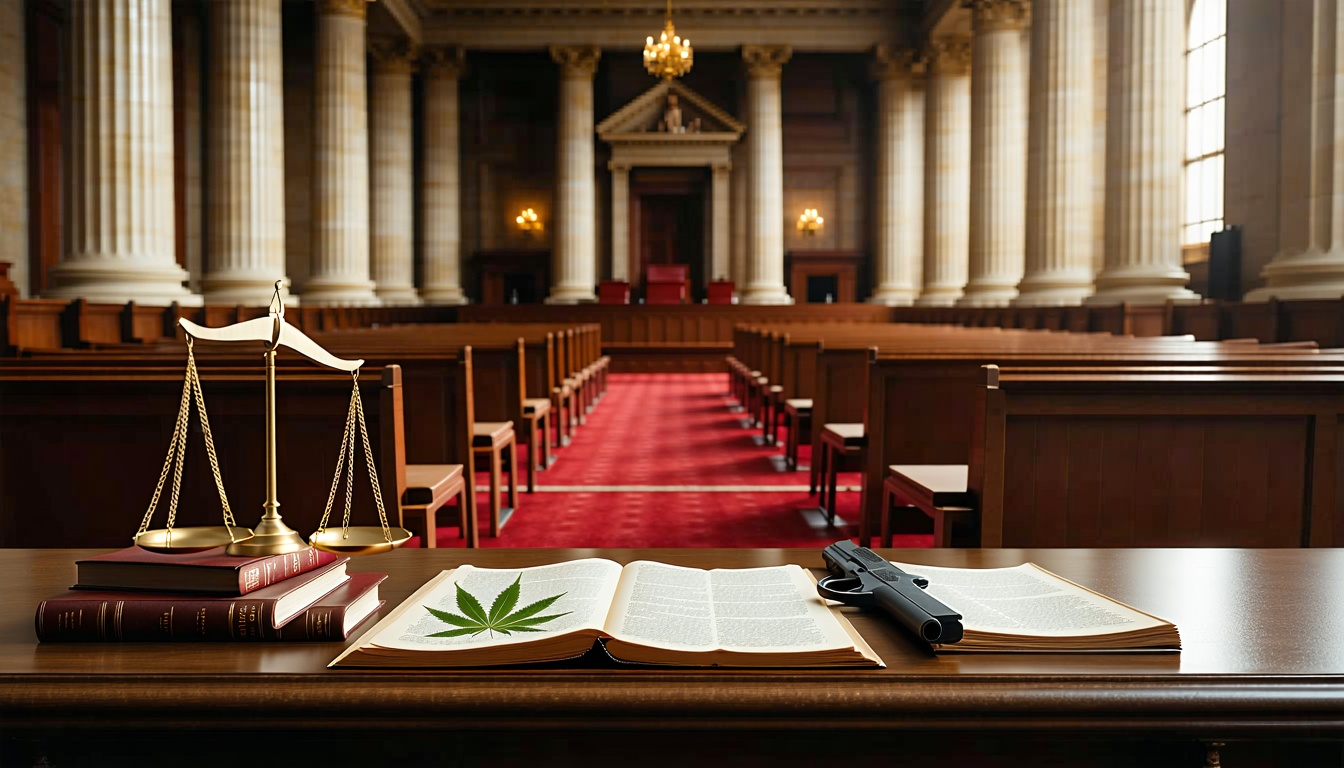
The case, U.S. v. Hemani, centers around Ali Danial Hemani, who was charged with possessing a firearm while using marijuana. Hemani’s attorneys argue that the federal statute prohibiting cannabis users from possessing firearms lacks adequate historical analogues, fails to clearly define who is considered an “unlawful user” of a drug, and is at odds with evolving marijuana policies at the state and federal level.
The brief contends that the ban on gun ownership by marijuana consumers is “draconian” and violates the Second Amendment of the U.S. Constitution. The attorneys argue that the government’s desire to avoid discussing marijuana is understandable, but that the federal government has recognized that marijuana is not as dangerous or addictive as other drugs.
The brief also points out that Trump’s recent executive order directing the completion of the federal cannabis rescheduling process shows that the government is shifting its stance on marijuana. The order recognizes the medical value of cannabis and its relative risk of abuse compared to other drugs.
The ACLU attorneys argue that the federal government’s approach to marijuana is outdated and makes it an outlier compared to most states that have legalized marijuana use in some form. They also contend that the federal government’s stance on marijuana is at odds with the fact that tens of millions of Americans use marijuana responsibly and in moderation.
The brief was submitted to the Supreme Court with just over a month until oral arguments are scheduled to take place. The case has garnered attention from various groups, including firearm control organizations, historians, and law professors, who have submitted briefs on both sides of the issue.
The outcome of the case could have significant implications for the federal ban on gun ownership by marijuana consumers. If the Supreme Court rules in favor of the government, it could mean that the ban remains in place. However, if the court rules in favor of Hemani, it could pave the way for a reevaluation of the federal ban on gun ownership by marijuana consumers.