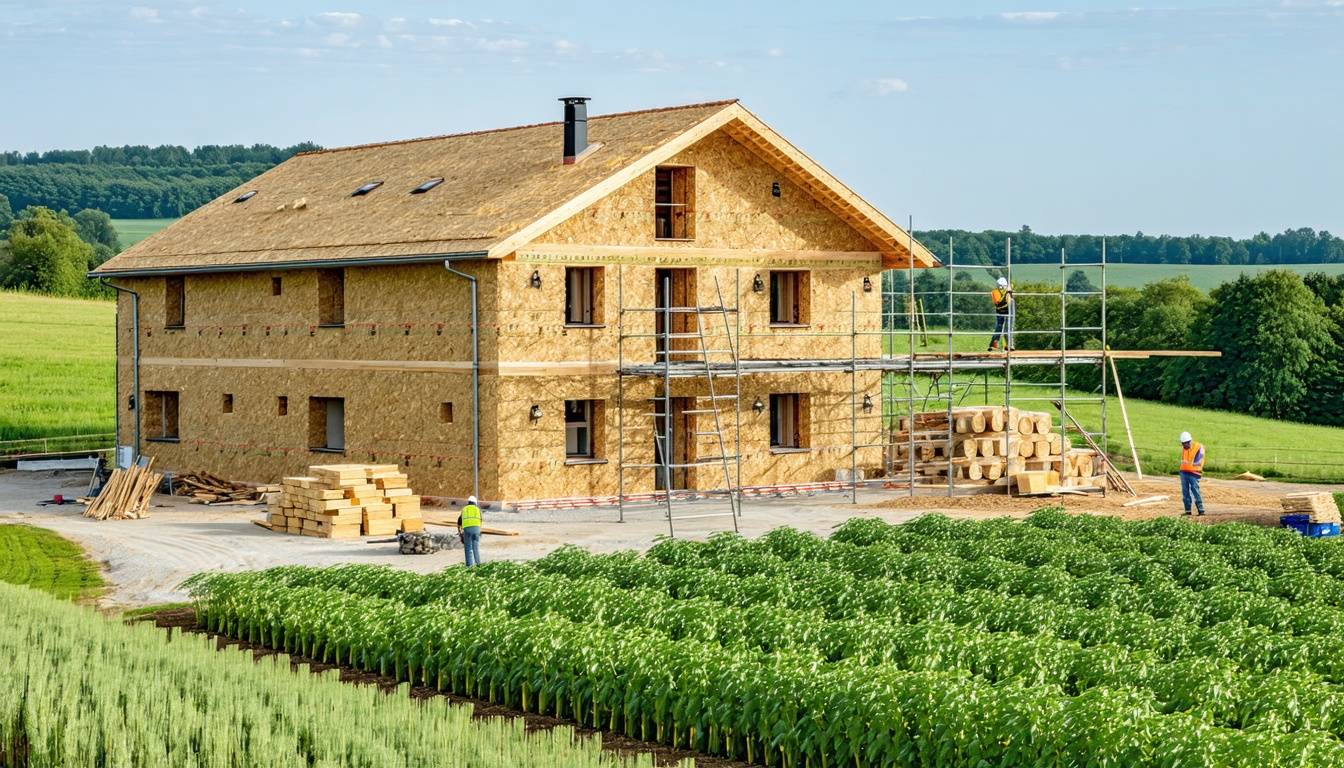
A New Era in Sustainable Building: Hemp-Based Materials Take Center Stage
In a groundbreaking development, thousands of homes are being constructed using plant-based materials, with hemp emerging as a key player in the quest to reduce carbon emissions in the construction industry. The woody core of hemp’s stem can be processed into a solid, fireproof, and breathable building material, making it an attractive option for environmentally conscious builders.
Hemp, a non-psychoactive cousin of cannabis, was once a staple crop in the UK, used to produce a range of products including sails, rope, clothes, oil, and food. Despite its historical significance, hemp’s cultivation was banned in the 1920s due to its association with cannabis. However, experts believe that industrial hemp, which contains virtually no THC, has the potential to become a “win-win crop” for farmers and the environment.
Ian Wilkinson, co-founder of FarmED, a West Oxfordshire-based not-for-profit farming education and research center, emphasizes the benefits of hemp as a building material. “It’s a crop that farmers can grow to meet the demand for sustainable building materials,” he said.
In the UK, a small number of farms are licensed to grow industrial hemp, which is processed into a range of products, including hempcrete, hemp blocks, hempboard, and hemp fiber for insulation. As the construction industry continues to grapple with the challenges of climate change, hemp-based materials are poised to play a significant role in reducing carbon emissions and promoting sustainable building practices.