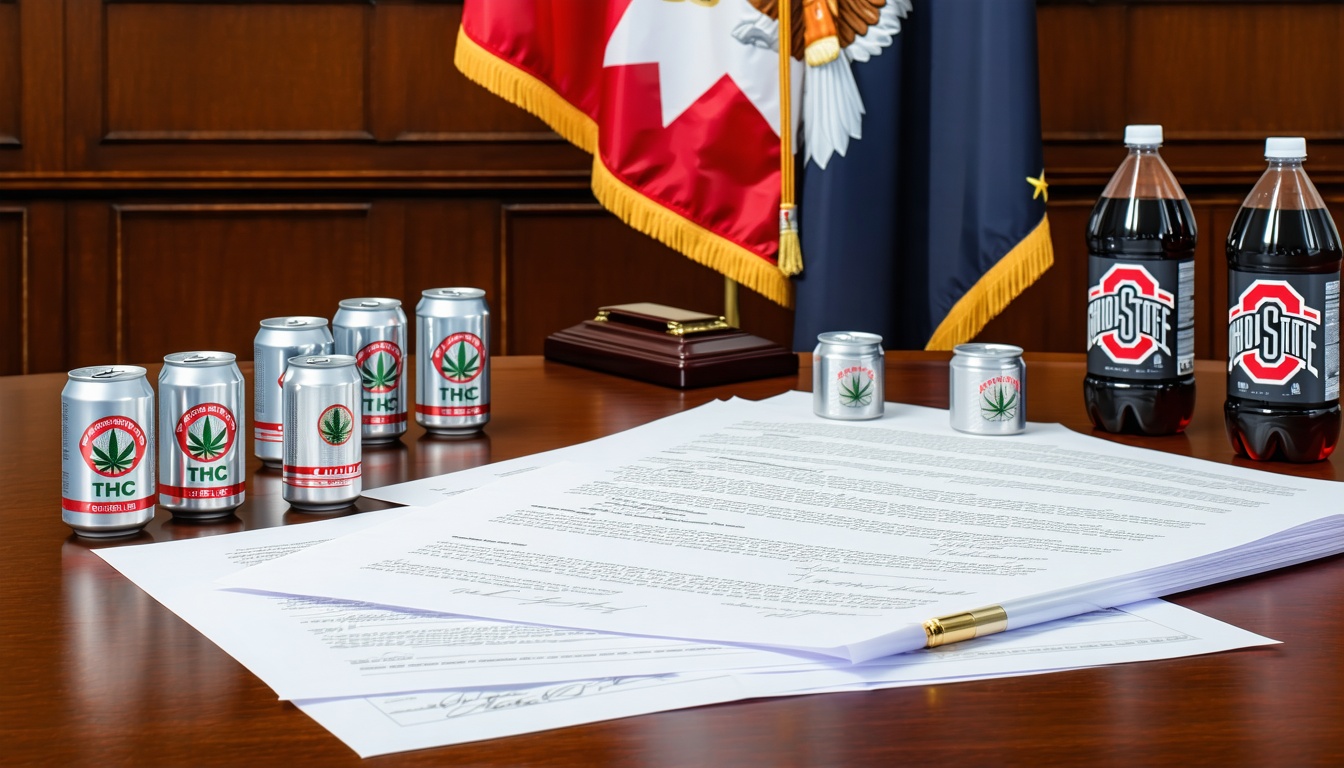
Ohio Governor Mike DeWine has signed executive orders to restrict the sale of “intoxicating hemp” products, including THC-infused beverages, in the state. The orders require retailers to remove these products from their shelves by October 14. THC-infused beverages contain delta-9-tetrahydrocannabinol, the primary psychoactive compound in cannabis, and are derived from hemp, which contains no more than 0.3% delta-9 THC.
The products, which can contain 5-10 milligrams of THC, have become popular due to their low calorie count and perceived health benefits. However, Governor DeWine has expressed concerns about the lack of regulation and testing of these products, particularly among children. He has urged lawmakers to take action to regulate the industry and has also considered taking executive action to address the issue.
The popularity of THC-infused beverages can be attributed to the growing trend of consumers seeking healthier alternatives to traditional beverages. The drinks are often marketed as a way to relax, focus, or sleep, and can be consumed at any time, unlike alcohol. However, the long-term effects of consuming THC-infused beverages are not yet fully understood, and some experts have raised concerns about the potential risks of frequent and heavy consumption.
In contrast to alcohol, THC-infused beverages can take longer to take effect, typically between 30 minutes to two hours, and the effects can last longer. Additionally, while frequent and heavy alcohol consumption can lead to serious health problems, THC-infused beverages have been linked to mental health issues such as psychosis, anxiety, and memory loss.
The Ohio government has yet to pass a law regulating the sale of THC-infused beverages, but Governor DeWine’s executive orders aim to restrict the sale of these products until a regulatory framework is in place. In the meantime, consumers are advised to exercise caution and be aware of the potential risks associated with consuming THC-infused beverages.